

Why Serve and Return is Key to Early Relational Health
Published by Kindermusik
The first year of pediatric checkups often involve the same question: “Are you talking to them?” While speaking to your infant is critical to early development, the one question that may not be asked is how you converse with them—that’s where serve and return comes in.
What science says about Serve and Return…
Meaningful connection between a child and their caregiver—which feeds into something called secure attachment—requires more than grownups talking at them. In fact, studies have found that a lack of secure attachments in a child’s early life can negatively impact all areas of their development, including self-regulation and the ability to empathize with others.
One way to ignite and nurture this connection is through “serve and return”: responsive back-and-forth interactions between a child and caregiver. These interactions involve a child doing or saying something (the “serve”) and an adult responding in some way (the “return”), followed by a long pause for the child to process.
According to the Center on the Developing Child at Harvard University, more than one million new neural connections are formed in a child’s brain in their first years of life. Research shows that serve and return helps support these connections, forming a foundation for healthy brain architecture.
Find out how to easily weave these interactions into your daily life and what happens to your child’s development when you do.
Four ways to tune up Serve and Return…
Babble
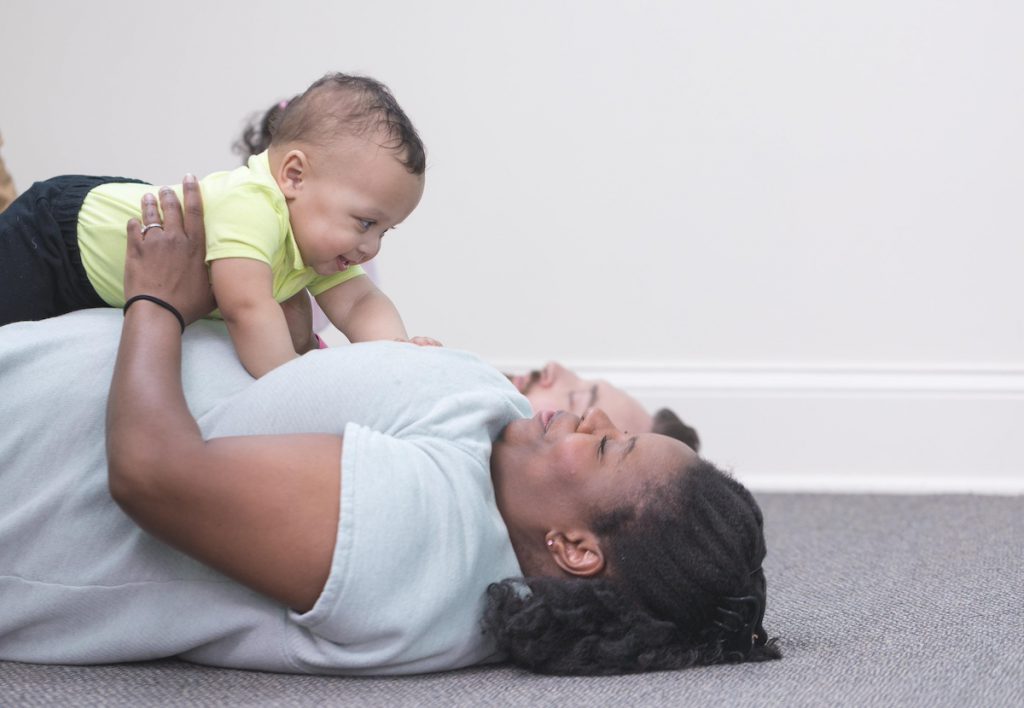
Babies babble to explore how language works. When your baby is babbling, babble back! Listen for their “serve,” then imitate their sounds as your “return” (use a high-pitched, slow voice and maintain eye contact to help foster the baby’s communication skills). Then, pause after you respond to give them a chance to make a response of their own, then continue the interaction. It’s like a game of tennis!
Engage in spur of the moment babbling, or:
- Play “On the Farm” on the free Kindermusik app.
- Pause the track after each animal sound and see if your baby makes a sound of their own.
- Imitate them, pause, and repeat!
Continue these back-and-forth activities as often as possible to foster expressive and receptive language skills your child will need to hold conversations later in life.
Explore Objects with Music
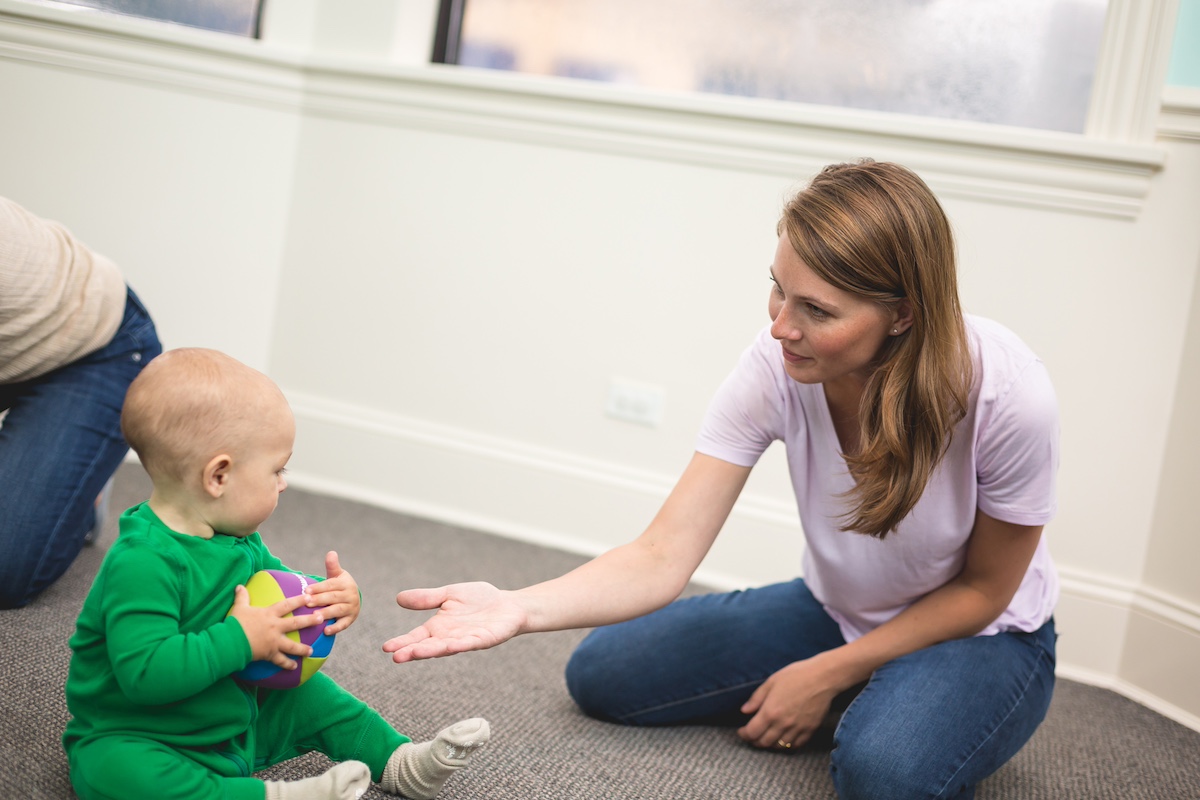
Give your baby an object to explore, such as a ball, shaker, or a favourite toy.
-
- Explore the object without music first so they can focus on one thing.
- Notice how they’re manipulating the object, name it, and imitate their actions. “I see you tapping the ball on your foot. Look, I am tapping mine on your foot, too!” Pointing out and naming what your baby is doing helps them understand the world around them.
- Include a long pause to allow your child to process your response.
- After returning the serve, manipulate your object in a different way and encourage the baby to imitate you!
Once you’ve explored the object for a couple minutes, play gentle yet upbeat music in the background, like “Tue, Tue Instrumental” below or on the free Kindermusik app, and continue exploring.
Play Peekaboo
Babies and caregivers alike love to play peekaboo. Not only does it develop a child’s sense of object permanence, it also is a great way to practice serve and return.
- Using a translucent scarf or tissue paper, cover your baby’s face (or yours!).
- Ask, “Where is _baby’s name_?” several times, then lift the scarf and say “There he/she is! Peekaboo, I see you!”
- Wait for the baby to respond with a smile, laugh, or vocalization, then repeat.
You can even sing or listen to “I See You” (play it below or stream it on the Kindermusik app), and encourage your child to lift or pull the scarf to lead the interaction themselves.
Share a Story
Making books part of your baby’s routine early in life helps nurture a love of reading. When sharing a story, help your baby participate by pointing out different parts of the book. If your baby is reaching toward a specific page or picture, ask questions and name the object: “What’s that? That’s a ___!” When your baby babbles back to you, encourage them by saying “Yes! A ____!” Pointing out different objects and asking questions about them teaches your child that things have names.
Try these tips with a book of your own, or check out “Sailing to Dreamland” on the free Kindermusik app.
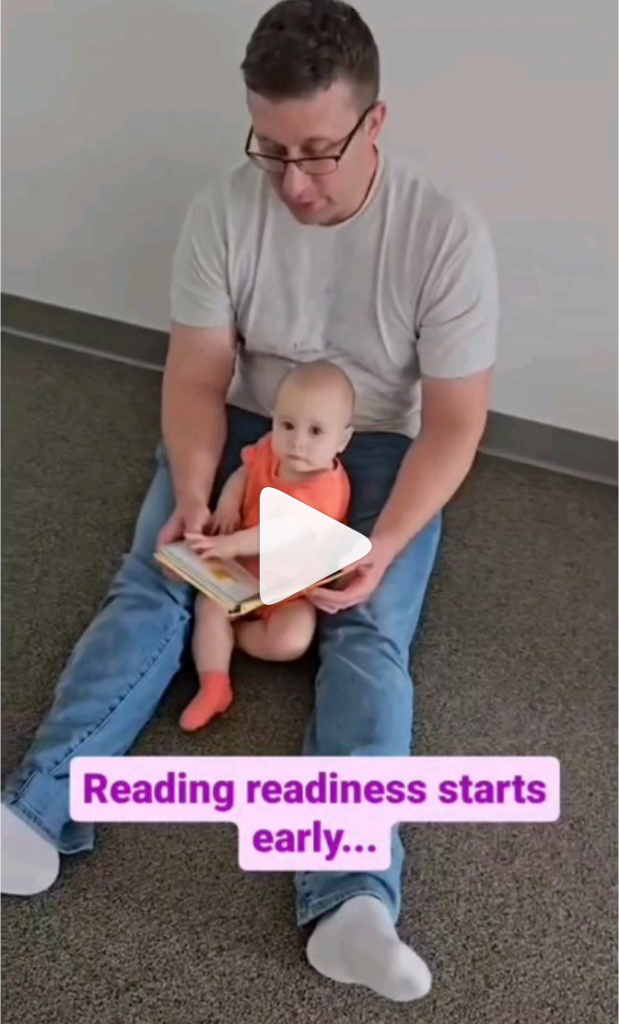
From babbling back and forth to describing pictures in a story, incorporating serve and return interactions into daily routines will foster connections between you and your baby, all while supporting those neural connections that directly affect success in school, relationships, first jobs, and beyond.
For more musical and read-aloud serve and return tips, join a Kindermusik class at Hamilton School of Music.